
Shoulder + Pelvis : Bring clarity to your hands by understanding the biomechanics of the body.
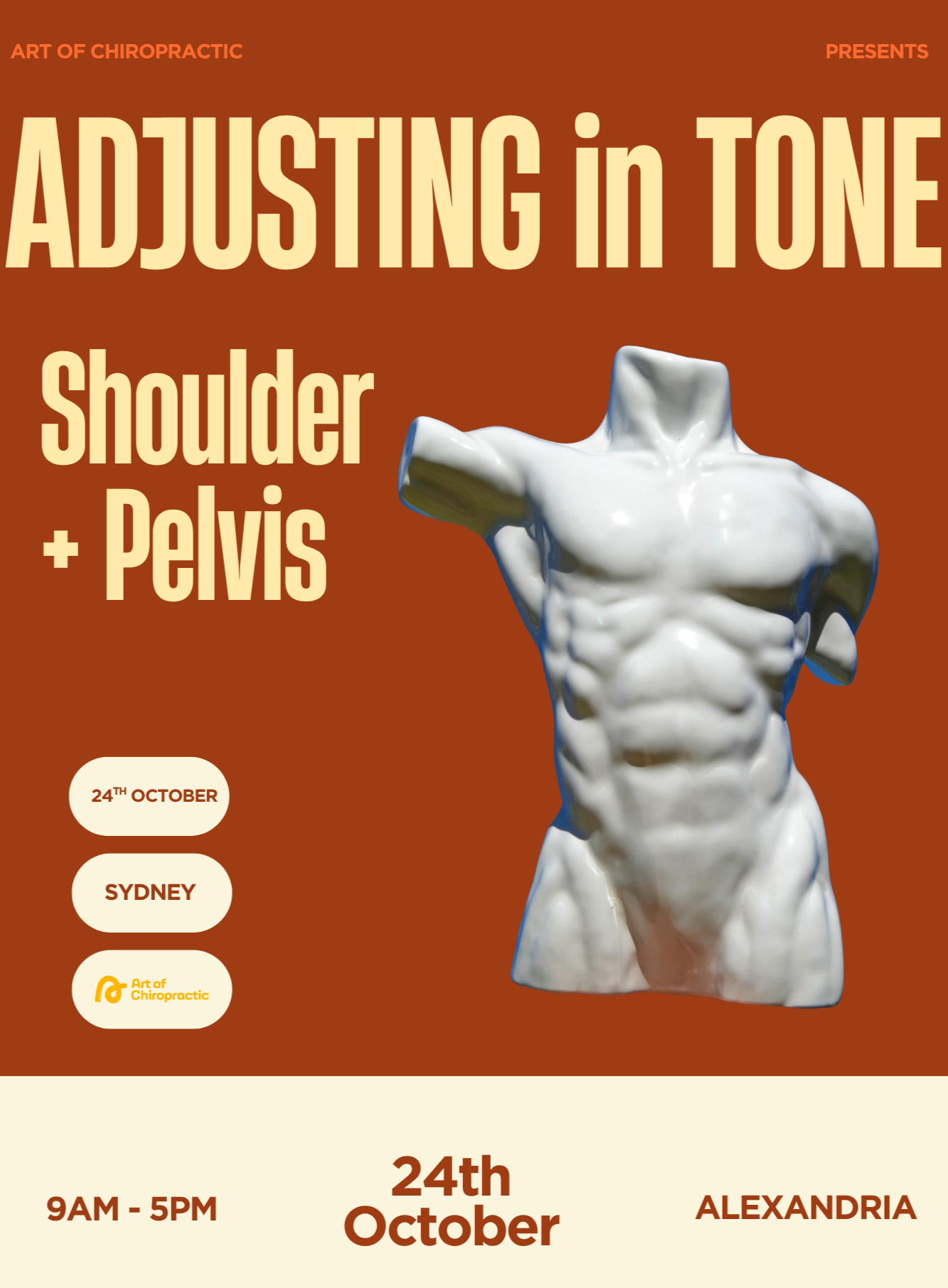
Adjusting isn’t just technique. It’s timing.
Refine how you read the body, understand tone, and adjust with precision - not force.
A small group, hands-on experience for chiropractors and hands on body workers who know there’s more happening under their hand…..but haven’t been shown how to work with it.
*Limited to 30 practitioners per event
There comes a point in practice where you know the adjustment you were taught isn’t the one the body needs……but you do it anyway. Because that’s what you were trained to do.
You feel:
The body isn’t ready
The response isn’t landing
Something is being missed.
And over time, that creates doubt. Not in chiropractic, but in how you're applying it. The issue isn’t your technique. And it’s not that you’re “too sensitive.”
It’s that most practitioners were never taught how to:
Read tone before force
Recognise when the body is not ready to receive an adjustment
When you understand this, everything changes.

Adjusting isn’t just technique.
It’s timing.
Refine how you read the body, understand tone, and adjust with precision - not force
ADJUSTING IN TONE
Adjusting in Tone is a practical, hands-on training designed to refine how you assess, interpret, and adjust the body. This is not about doing more. It’s about seeing more and acting with precision.
SHOULDER + PELVIS -
Saturday, 24 October 2026
The body is not a collection of parts. It is a living design.
Learn to see beyond individual muscles and joints and begin to recognise the lines, relationships and patterns shaping the way the whole body moves, adapts and responds.
The next module in the Adjusting in Tone series : Shoulder +Pelvis : October 24th - Sydney
The shoulder + pelvis are two powerful regions. One connected system. The shoulder and pelvis are often treated as separate areas.A sore shoulder gets assessed as a shoulder. A restricted hip gets assessed as a hip. But the body does not work in isolated parts.The shoulder and pelvis organise movement, rotation, load and balance across the entire body. What happens in one region can change what you see and feel somewhere else.
Shoulder + Pelvis is a practical, hands-on workshop designed to help you understand these regions beyond individual muscles and joints.We will explore their anatomy, their design, their relationship to one another and, most importantly, what you can feel through your hands.
THE PROBLEM
You know the anatomy and you know the techniques. But sometimes what you feel under your hands does not match what you expect, the painful area may not be the area driving the pattern. A shoulder can keep returning to the same restriction and a pelvis can look uneven without needing to be “corrected.” And sometimes, the more you chase individual muscles, joints and symptoms, the less clear the body becomes. This workshop gives you another way to look. Instead of asking: “What do I need to fix?” we begin asking: “What is this body actually doing?”
WHY SHOULDER + PELVIS?
The shoulder and pelvis are remarkable pieces of design, both connect the limbs to the trunk, both need stability and freedom, both respond to load, gravity, rotation and movement and both can influence how force travels through the rest of the body. When you understand their design, you begin to see more than individual structures. You begin to recognise relationships. Instead of seeing separate parts, you begin to see the body as a connected system.
WHAT WE WILL EXPLORE
Throughout the day, we will move between anatomy, observation, palpation and hands-on practice.
We will explore:
The basic anatomy and design of the shoulder girdle and pelvis
How each region is designed to move
Stability versus mobility
Rotation and counter-rotation through the body
How force travels between the upper and lower body
How to distinguish the obvious area from the area that may actually need your attention
How to use palpation to follow movement, tone and changing tension
How to decide when to adjust, when to follow and when to leave something alone
Most importantly, we will put it into practice.
You will have time to look, feel, question, practise and refine.
Learn to See the Body Differently
There is a difference between looking at a body and truly seeing its design. We will invite you to slow down, notice more and explore the relationships that shape movement, adaptation and tone. If you are ready to move beyond isolated parts and develop a more integrated understanding of the body, I would love to welcome you into this next Adjusting in Tone module.
-
WHO THIS WORKSHOP IS FOR
This workshop is designed for chiropractors and experienced hands-on allied practitioners who:
Have a good foundation in anatomy but want to experience it differently
Can feel something under their hands but sometimes struggle to interpret what they are feeling
Want to move beyond simply chasing symptoms
Want more confidence in their palpation
Are curious about whole-body relationships
Want to understand the body rather than impose a predetermined correction
Want to use less force without losing clinical clarity
Want their hands-on work to feel more precise, considered and individual
You do not need to practise a particular technique.
You do need to be willing to look, feel and explore.
-
TWHO THIS WORKSHOP IS NOT FOR
This workshop may not be for you if you are looking for:
A rigid step-by-step adjusting protocol
A list of techniques to memorise
A single correction for every shoulder or pelvic presentation
A purely theoretical anatomy lecture
A workshop where you sit and watch all day
Students
This is an experiential workshop.
You will be using your hands.
You will be asked to observe.
You will be asked to slow down.
And you will be encouraged to question what you think you already know.
-
Dr. Therese Perdedjian, Chiropractor has been in practice, and teaching for over 12 years.
She is known for her ability to translate complex, often unspoken clinical experiences into clear, applicable frameworks.
This is the first time she is formally teaching her approach to:
Reading tone
Working through layered systems of the body
Adjusting with clarity and precision
-
Do I need to have attended another Adjusting in Tone workshop?
No. The workshop is designed so the principles can be understood and applied on the day. Previous Adjusting in Tone experience will add another layer to the work, but it is not essential.
Is this an adjusting technique seminar?
No. We may explore adjusting and intervention, but the focus is not on memorising techniques. The focus is on improving how you observe, palpate and make clinical decisions.
Will there be hands-on practice?
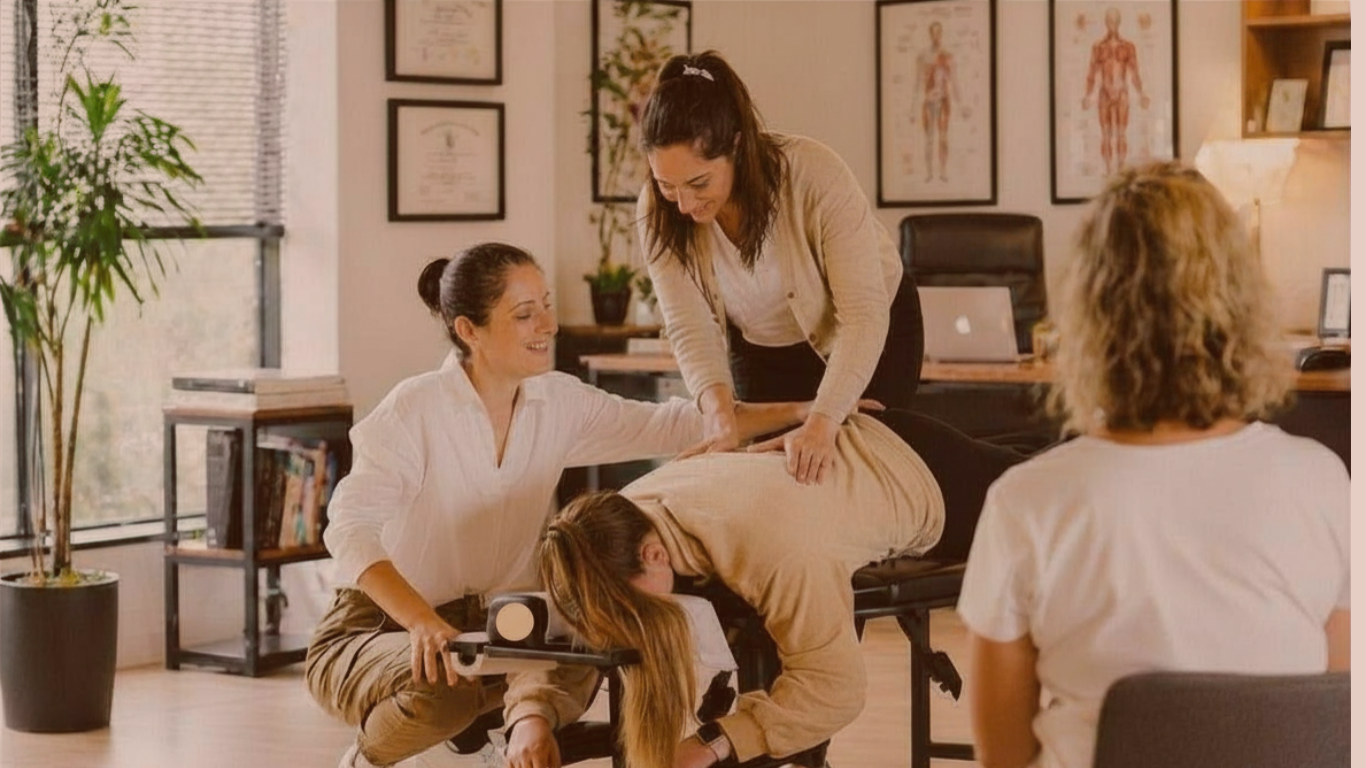
Yes. This is a practical workshop. There will be demonstrations, partnered exercises and time to explore the concepts through your own hands.
Do I need advanced anatomy knowledge?
No. We will revisit the important anatomy in a practical way. The aim is not to test how much anatomy you remember — it is to help you use anatomy more effectively through your hands.
Is this only for chiropractors?
No. The workshop is particularly relevant to chiropractors, but it may also suit experienced osteopaths, physiotherapists and other hands-on allied health practitioners who already have a strong anatomical foundation.
What should I bring?
Bring comfortable clothing suitable for hands-on practice, something to take notes with and, most importantly, your curiosity.
Adjusting In Tone
This is not about doing more. It’s about seeing more and acting with precision.
EVENT DETAILS
Event: Adjusting in Tone - Shoulder + Pelvis
Facilitator: Dr. Therese Perdedjian, Chiropractor
Dates: October 24th Saturday (limited intake)
Time : 9am - 5pm
Location : Sydney, Green Square
Format: Small-group, hands-on training
Capacity: 30 practitioners per event
Standard: $1045 (next 10 stops) ; Final Release: $1195
Simply email us at admin@artofchiropractic.com.au to register and arrange payment directly
You already know when something isn’t landing. This is where you learn why.